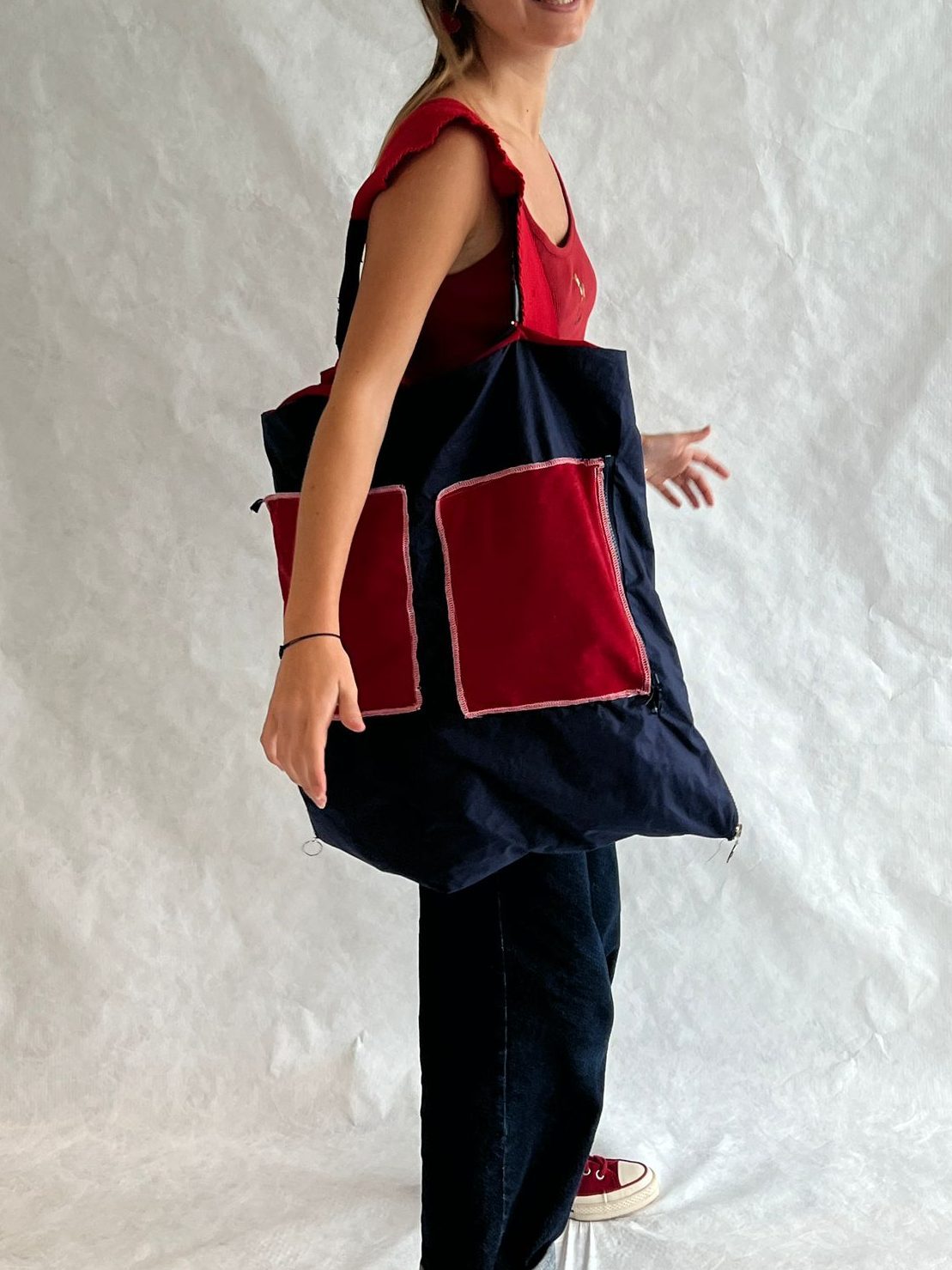
This project explores a transformable bag designed for Cyclora, a fictional cycling superhero. The tote converts into a wearable cape, using soft materials and data-driven ideas to shape form and function. The project focuses on learning through making, material experimentation, and playful storytelling as a design approach.
Elective group project
8 week group project
My role
Ideation, data integration & coding, concept development, soft-material prototyping, fabrication
Project overview
This project was part of a university course focused on translating immaterial ideas—such as data, code, and concepts—into material, physical objects. Rather than working towards a fixed outcome, the course encouraged exploration through hands-on making, experimentation, and iteration.
For me, the project became about two main things: learning how to design with soft materials as a starting point, and finding creative ways to integrate data into a typically non-electronic product. Both pushed me into unfamiliar territory and reinforced the idea that making can be a powerful way of thinking.
Starting point
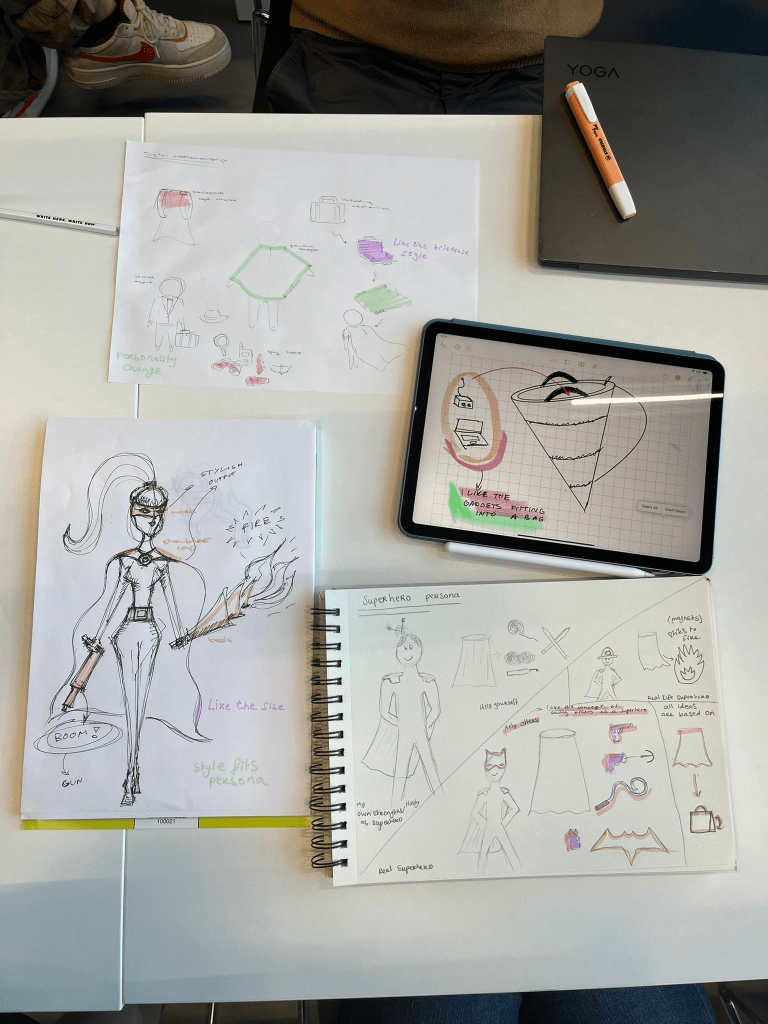
As part of the course, we were given a clear constraint: design a bag. Instead of approaching this as a generic product, our team chose to create a fictional character to design for.
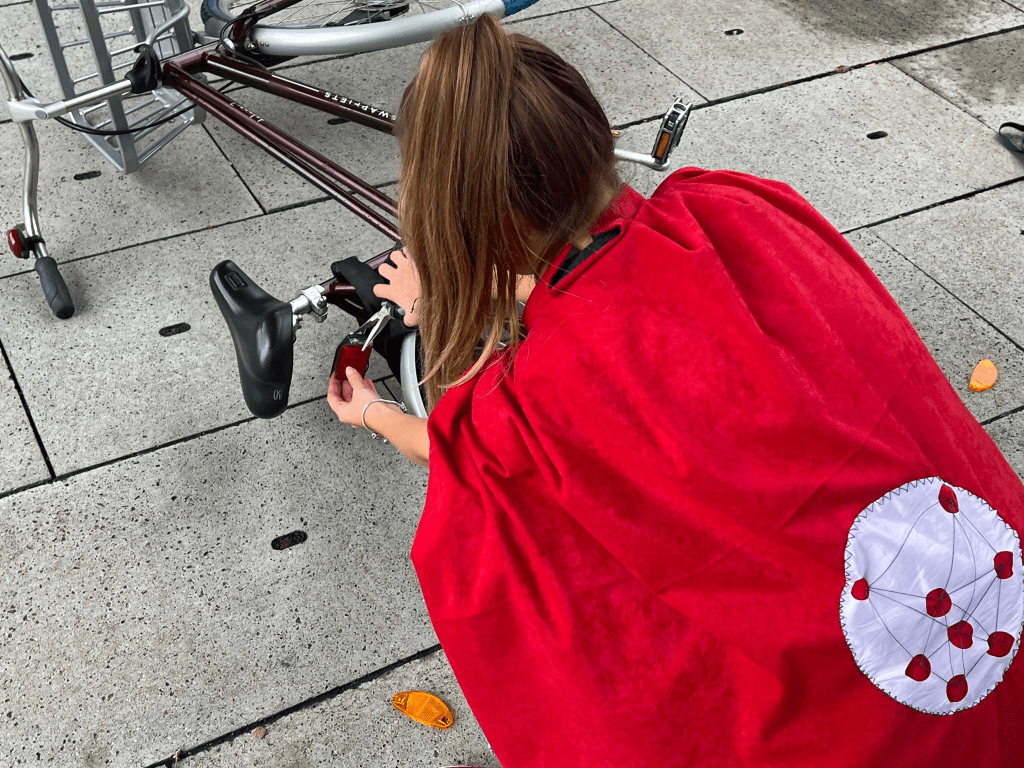
We introduced Cyclora, a cycling superhero based in the Netherlands. She helps people in her neighbourhood with bike-related problems and moves quickly through the city. Designing for a superhero allowed us to exaggerate needs, push functionality, and explore form more freely than designing for an average user.
Design question
How can digital data and soft materials come together in a physical object designed for a specific, fictional character?

Key explorations
Throughout the project, three explorations became central.
1. Soft material prototyping
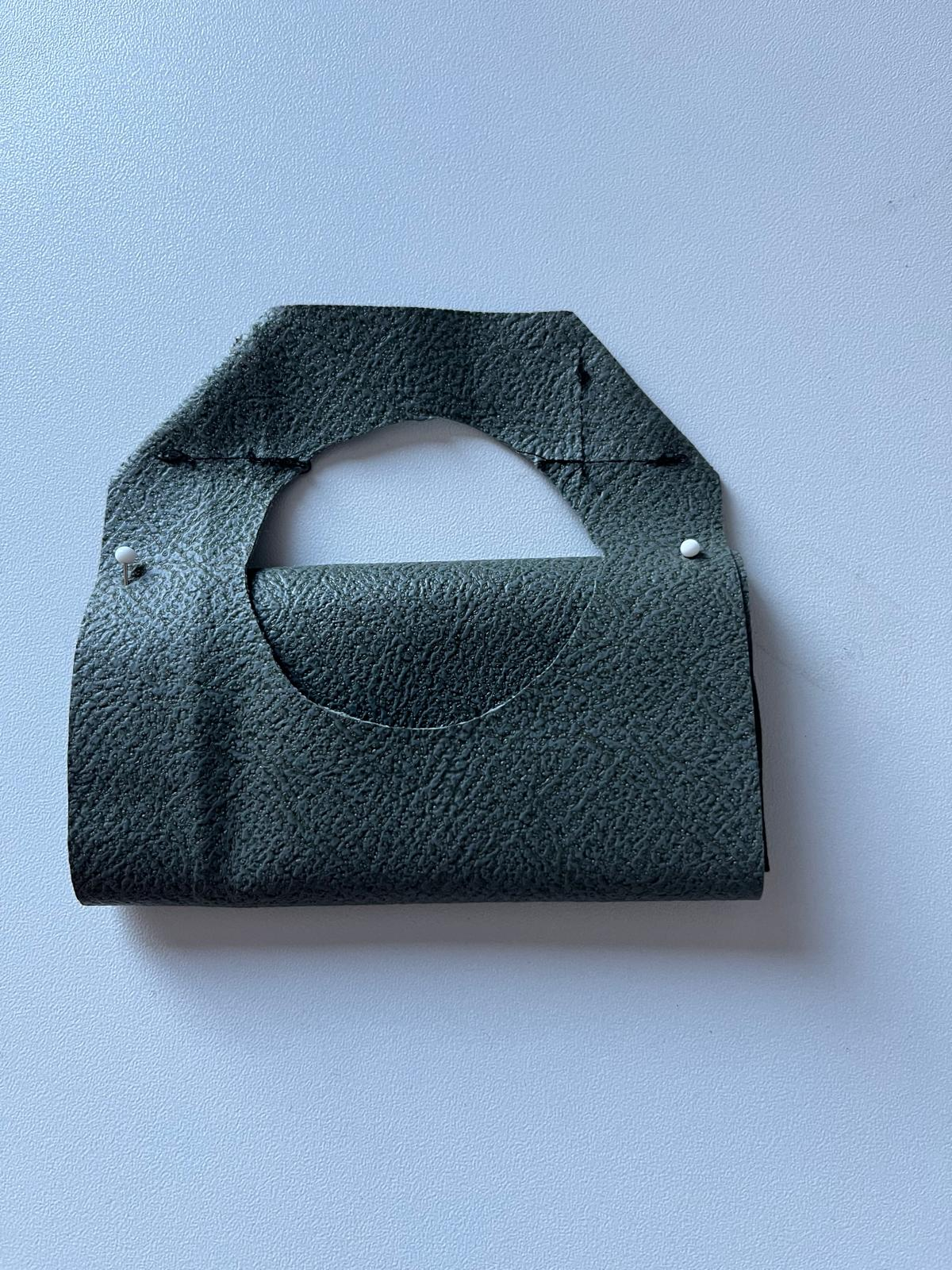
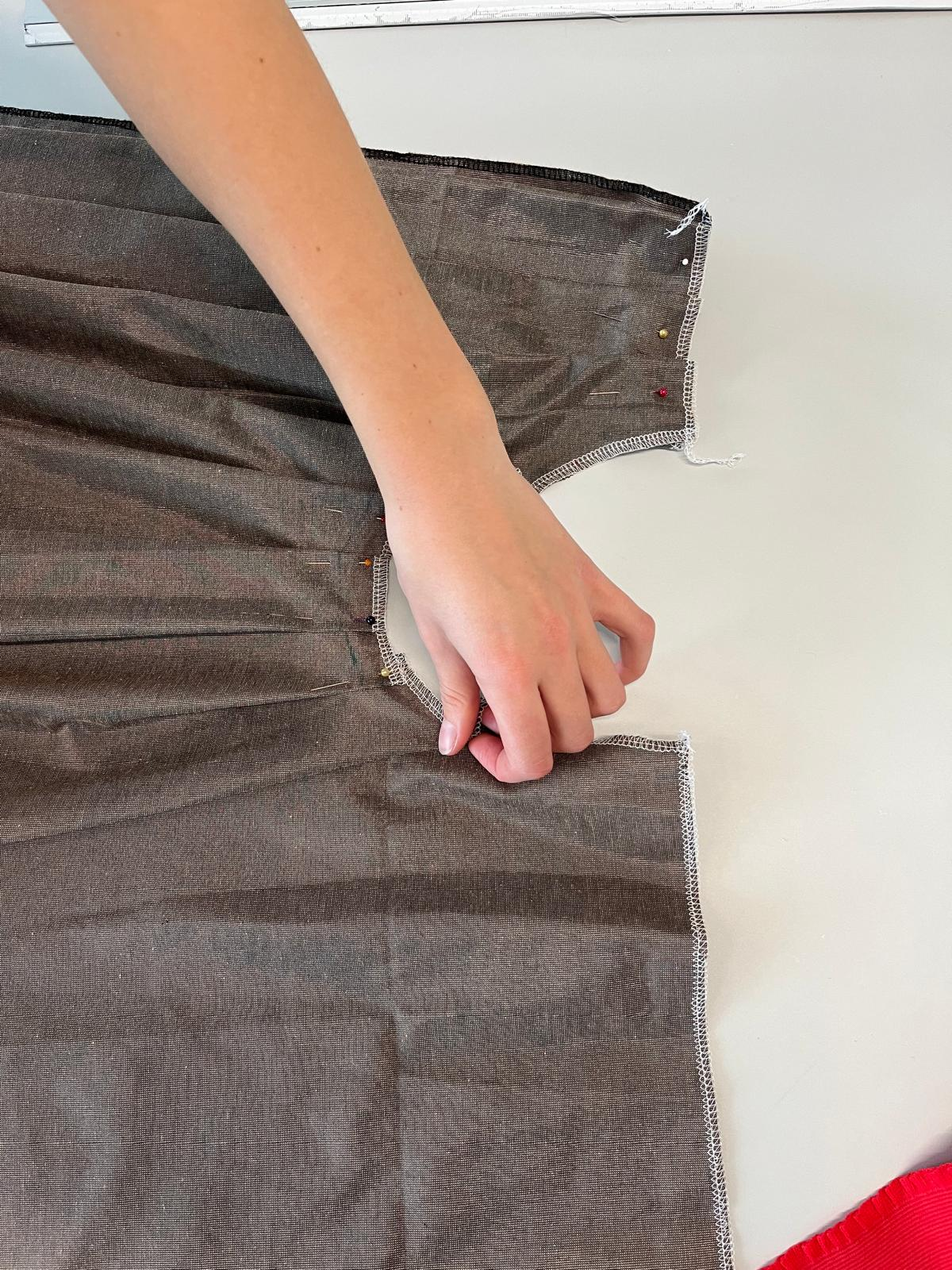
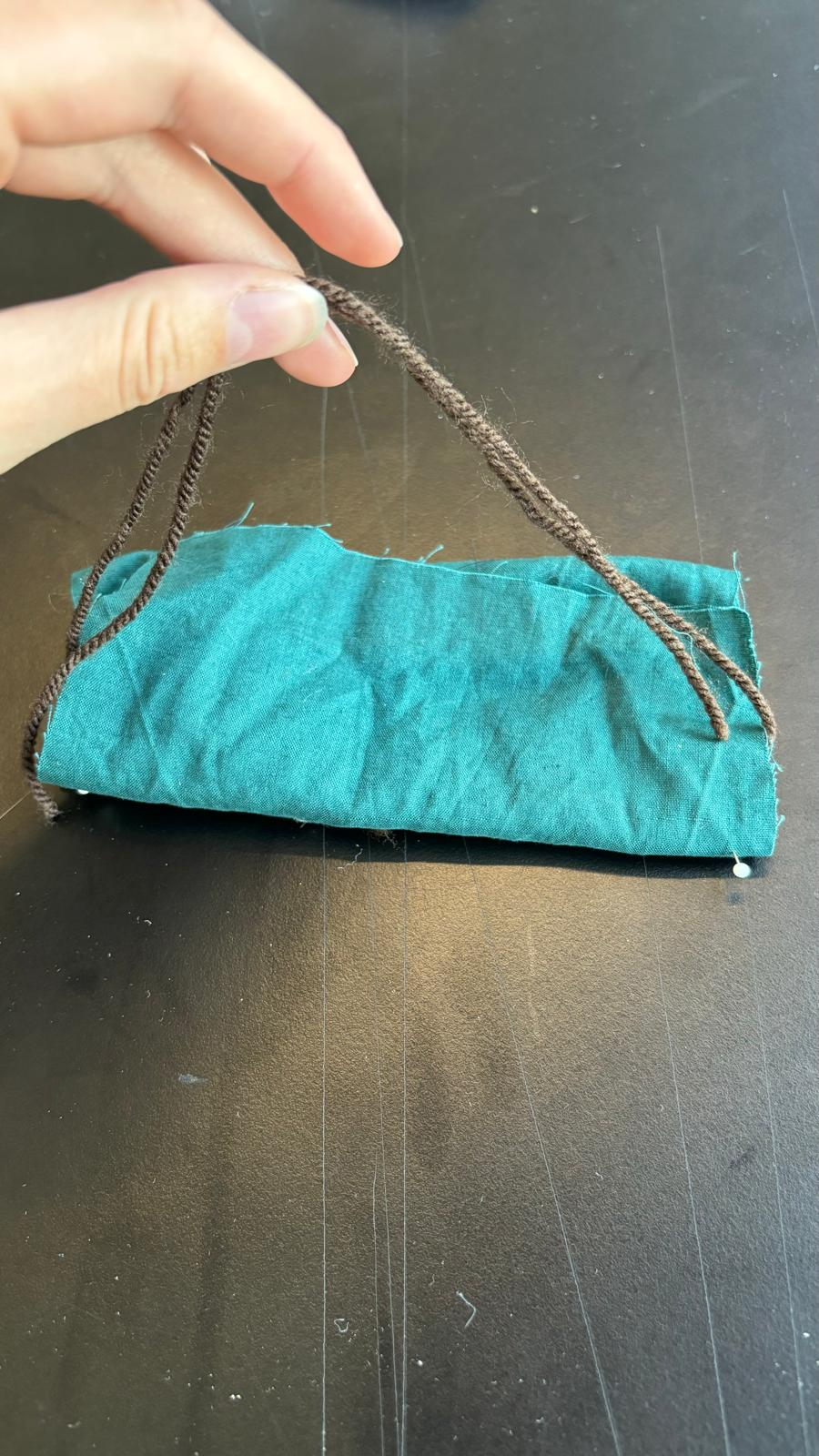
I focused heavily on experimenting with textiles and flexible materials. Working with softness early in the process helped shape the form and behaviour of the object, rather than treating material choice as a final step.
These early prototypes were rough and exploratory, but they helped us understand how fabric could fold, stretch, inflate, and move around the body.


2. Data exploration
Another key part of the project was exploring how data could influence form without relying on electrical components on the bag. I worked on integrating data and code as a design driver rather than a visible technological feature.
This required thinking creatively about translation: how abstract information could result in physical change, behaviour, or structure. Although challenging, this pushed me to approach data in more intuitive and material-focused ways.


3. From bag to cape
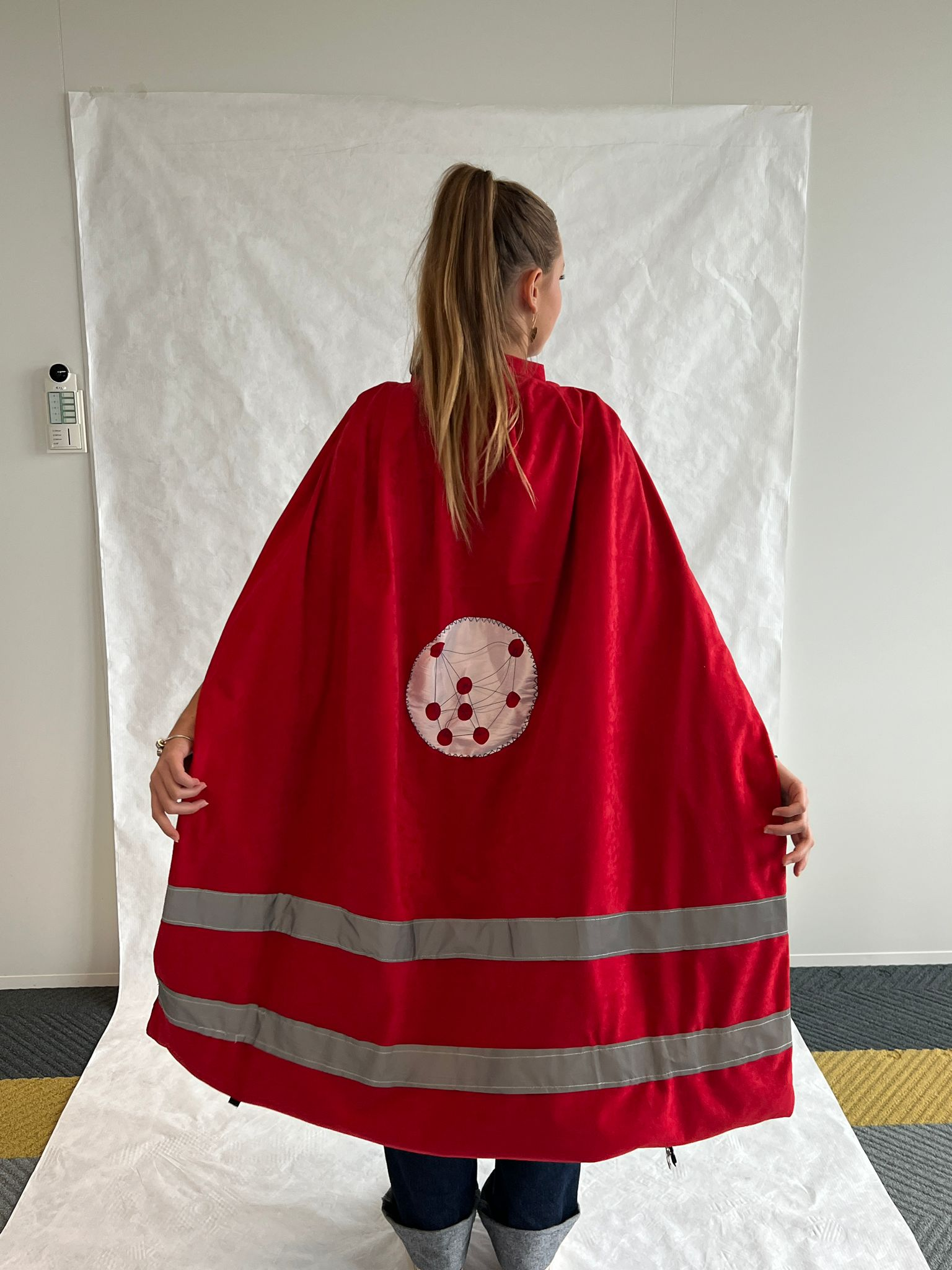
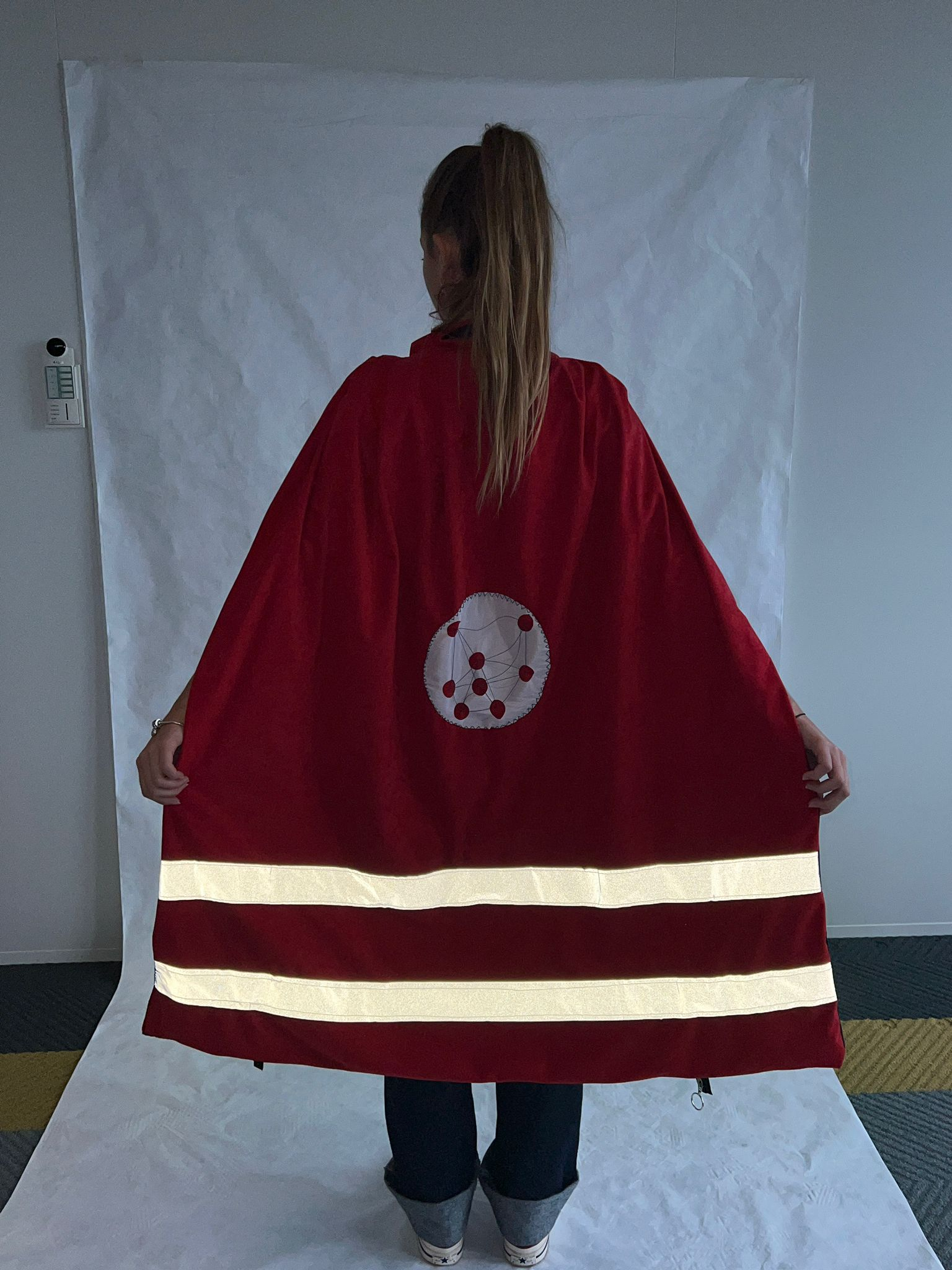
Combining these explorations led to the core idea: a tote bag that transforms into a cape.
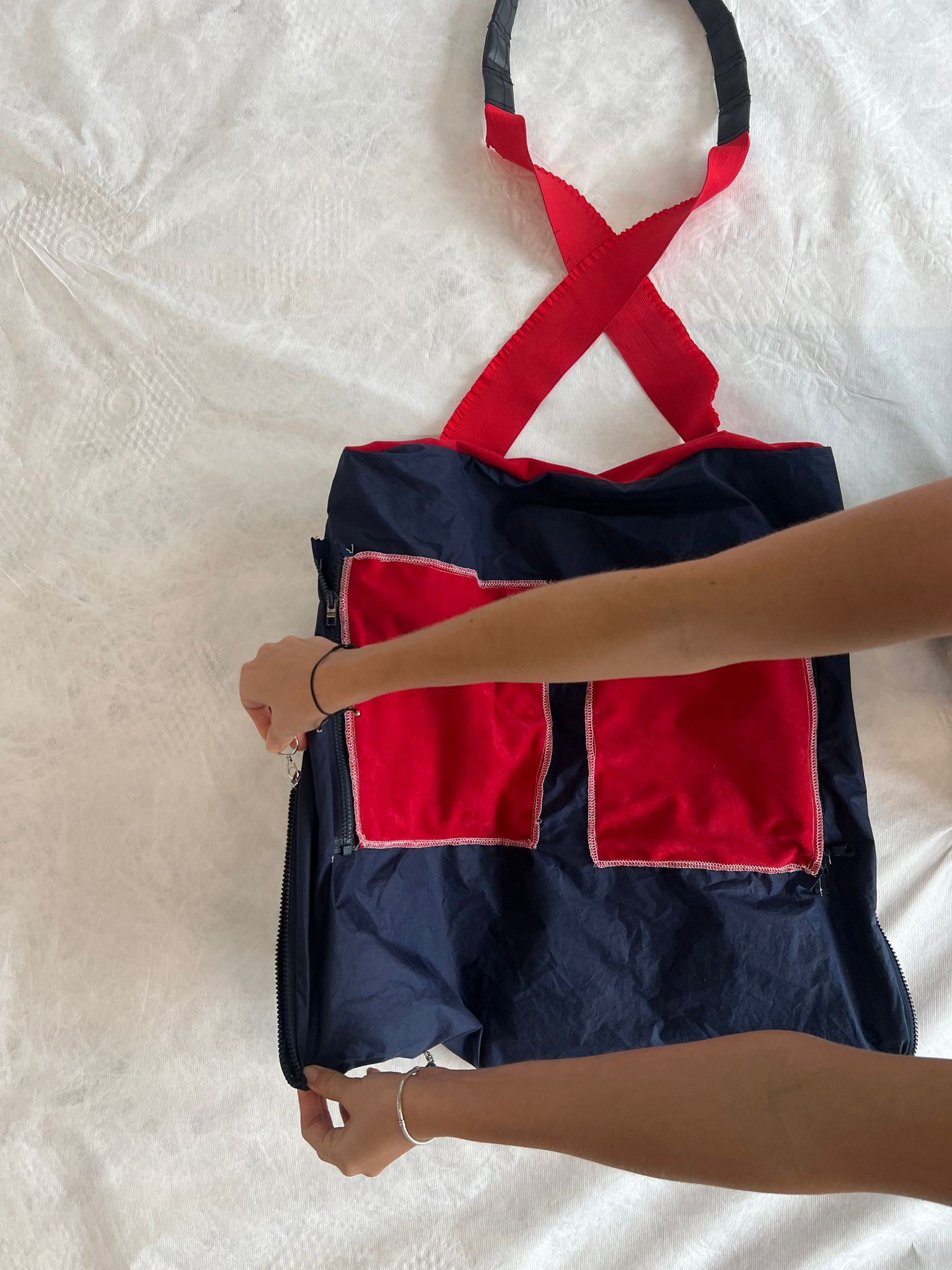
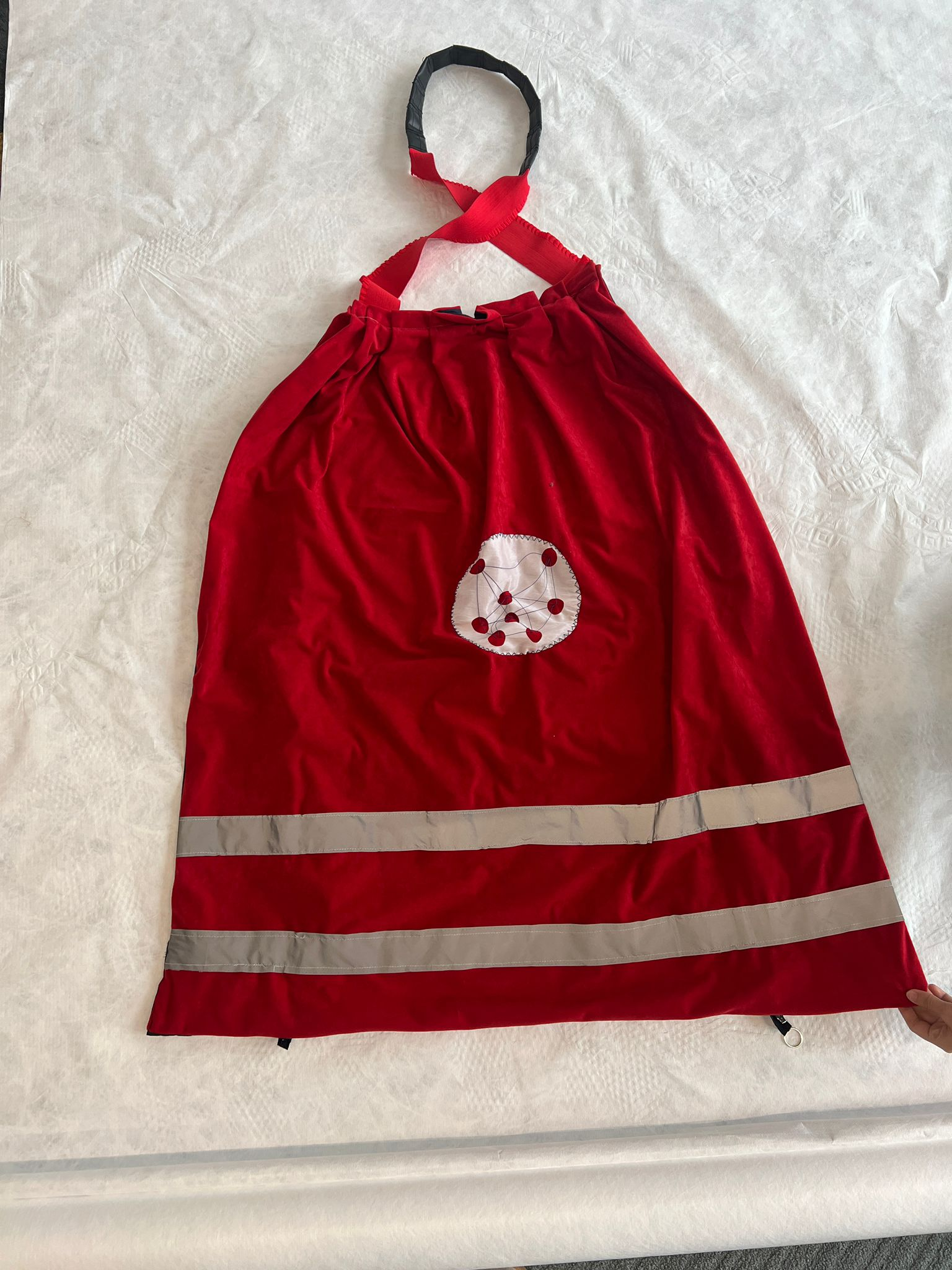
The bag is designed to hold the tools Cyclora needs for her work, while the transformation into a cape reflects her superhero identity. The shape-shifting behaviour allowed us to explore flexibility, movement, and storytelling within a single object.



Final concept: Cyclora’s cape bag
The final outcome is a soft, transformable bag designed specifically for Cyclora.
- Functions as a practical tote bag for tools
- Transforms into a wearable cape
- Uses soft materials to enable folding, shaping, and movement
- Explores data-driven decisions through form and construction rather than electronics
The result is not just a functional object, but a material expression of character, movement, and process.


Reflection
This project strengthened my confidence in learning through making. Working with soft materials early on helped me design more intuitively, while exploring data without electronics pushed me to think beyond familiar digital solutions.
What surprised me most was how much clarity emerged from experimentation. Instead of fully defining the outcome upfront, allowing the process to guide decisions led to more interesting and thoughtful results.
If I continued this project, I would further explore how different types of data could influence transformation and how the bag could respond more dynamically to use and movement.
 Sai Anish N.